


PeriVision VR Eye Test Matches Gold Standard in Glaucoma
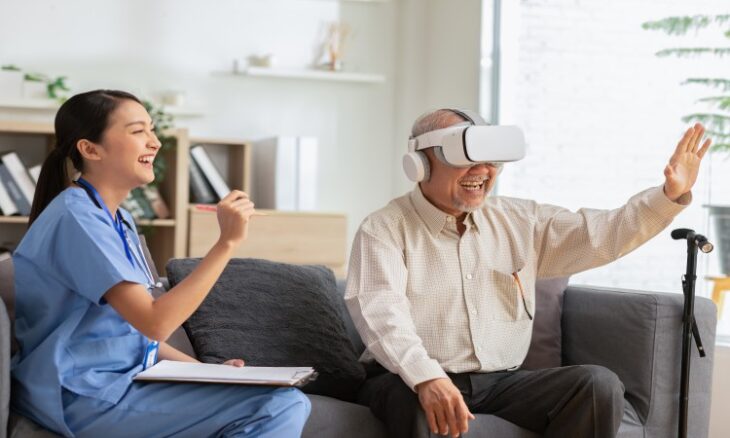
PeriVision, a spin-off of the University of Bern, has reported new findings from a study examining VisionOne, its platform that uses virtual reality glasses to measure the impact of glaucoma on visual fields. Information obtained from visual field testing is important for the prevention and treatment of the disease.
The study was conducted at University Hospital Bern, also known as Inselspital, and assessed VisionOne against the Octopus 900. The stationary perimeter is considered the gold standard for visual-field testing. The findings showed that VisionOne delivered comparable clinical performance across the full spectrum of glaucoma severity.
The study involved 73 patients, representing 120 eyes. The participants had mild, moderate or severe glaucoma. Each patient underwent examinations with both VisionOne and the Octopus 900 during the same visit, allowing the two methods to be assessed within a single clinical assessment.
The comparison found a high level of agreement between VisionOne and the Octopus 900. The agreement was also seen in patients with advanced glaucoma. The full study is available in the journal Ophthalmology Science.
The findings address one of the main reservations surrounding virtual reality perimetry. A key question for the technology has been whether it can accurately assess patients with advanced glaucoma. The results from the study included patients across mild, moderate and severe stages of the disease, with the comparison between the two examination methods extending to advanced cases.
The study therefore assessed VisionOne across the full spectrum of glaucoma severity rather than limiting the comparison to patients with less advanced disease. The inclusion of patients with mild, moderate and severe glaucoma provided the basis for comparing the virtual reality platform with the stationary perimeter across different stages of the disease.
The same-visit design also meant that each patient completed both examinations as part of the study. The 73 patients represented 120 eyes included in the comparison. The results showed a high level of agreement between the two methods, including in advanced cases, which have been a particular concern for virtual reality perimetry.
PeriVision’s findings concern VisionOne’s use of virtual reality glasses to measure the impact of glaucoma on visual fields. Visual-field information is relevant to the prevention and treatment of glaucoma, making the ability to assess disease effects an important part of the platform’s use.
The Octopus 900 served as the comparison method in the study. It is described as a stationary perimeter and is considered the gold standard. VisionOne’s performance was compared with that of the established method across the different levels of glaucoma severity included in the study.
The results were published in Ophthalmology Science. The publication compares the VisionOne platform with the Octopus 900 and includes findings from patients with mild, moderate, and severe glaucoma.
The study also examined the performance of the certified product version of VisionOne VFT. PeriVision said that the version incorporates the adaptive stimulus modulation method validated in the study.
The company said VisionOne VFT was released earlier this year. Since its release, PeriVision has said it has gained commercial traction across the European Union, the United Kingdom, and the United States.
PeriVision also said it holds the relevant regulatory certifications for those markets. The company’s reported commercial traction therefore covers the European Union, the United Kingdom and the United States, where the product has the relevant regulatory certifications.
The study’s findings centre on the comparison between VisionOne and the Octopus 900 across the full spectrum of glaucoma severity. Its 73-patient cohort comprised 120 eyes and included patients with mild, moderate, and severe glaucoma, with every patient completing both examinations during the same visit.
The high level of agreement between the two methods extended to advanced glaucoma cases. That finding addresses one of the main reservations about virtual reality perimetry: the ability of such systems to assess patients with more advanced disease accurately.
PeriVision’s reported commercial progress follows the release of VisionOne VFT earlier this year. The certified product version incorporates the adaptive stimulus modulation method validated in the study. At the same time, the company said the product holds the relevant regulatory certifications in the European Union, the United Kingdom and the United States.
The full study is available in Ophthalmology Science. It reports a comparison between VisionOne and the Octopus 900 across patients with mild, moderate, and severe glaucoma, including cases of advanced disease.